
Still fantasizing about a visit to the kingdom of Thunder Dragon ? One question always comes up first. How do you get around once you are there?
Bhutan is not like other countries. You cannot just open an app and book a ride. There is no Uber here. No Ola either. The taxi service in Bhutan works in its own unique way.
The government plays a big role in this system. Geography plays a role too. Mountain roads are different from city roads. Tourism rules add another layer.
Understanding the Taxi System in Bhutan
Bhutan keeps tight control over its transport sector. This is different from many South Asian countries.
In most places, taxis run freely without much oversight. Bhutan does it differently. The Road Safety and Transport Authority, known as RSTA, manages everything.
Every taxi must be registered. Every driver must follow fixed fare rules. This keeps the system fair and predictable.
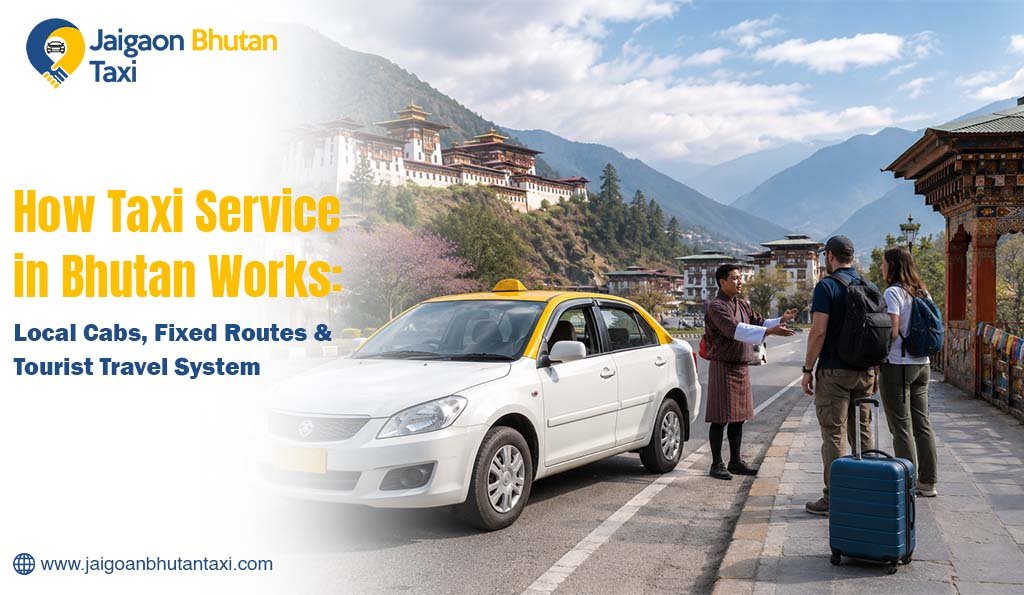
Most taxis in Bhutan are small cars. Maruti Suzuki models are common. You can spot them easily. They all carry yellow license plates. This colour separates them from private vehicles.
Taxi stands exist in most towns. You will usually find cabs waiting there, ready to go. You need a good car rental agency to roam around Bhutan.
Fixed Fare Structure: No Haggling Required
Here is something travellers love about car rental service in Bhutan. The fares are fixed.
The government reviews and sets these fares from time to time. This protects both passengers and drivers. Nobody gets overcharged. Nobody gets underpaid.
For tourists, this is great news. You will not be charged extra just because you are a foreigner. Fares are based on distance. Drivers usually carry a fare chart with them.
Cities like Thimphu and Paro do have metered taxis. But many drivers still prefer flat rates for common routes. Always confirm the fare before you get in. This simple step avoids confusion later.
Popular Bhutan Routes: A Quick Distance & Time Guide
Exact prices can shift with fuel costs and government reviews. But here is a rough idea to help you plan your budget.
Route | Approx. Distance | Approx. Time |
Jaigaon to Phuentsholing | 1-2 km | 10-15 mins |
Phuentsholing to Thimphu | 160-170 km | 5-6 hours |
Thimphu to Paro | 50-55 km | 1-1.5 hours |
Phuentsholing to Paro | 155-165 km | 4-4.5 hours |
Always confirm the current rate with your driver or operator before starting your journey. This table is meant as a guide, not a fixed quote.
What is The Daily Vehicle Rental Prices in Bhutan
Most tourists hire a vehicle for their full trip, not just a one-way ride. This is different from a single taxi fare. Here is a rough idea of daily rates for vehicles used inside Bhutan.
Vehicle | Average Daily Price |
Innova | ₹4,500 – ₹5,000 |
Hiace | ₹5,500 – ₹6,000 |
SUV | ₹4,000 – ₹4,500 |
It is witnessed that booking a cab through one reliable taxi service in Bhutan is much easier than arranging separate cabs for each leg of your trip.
Understanding tThe Sustainable Development Fee (SDF)
Every tourist has to pay this fee other than your vehicle fare. This fee goes directly to the Bhutanese government. It funds free education, free healthcare, and environmental conservation projects across the country.
For most foreign tourists, the SDF is currently USD 100 per person, per night. Indian citizens pay a separate, much lower rate, charged in Indian Rupees instead of US Dollars.
The SDF is collected at entry, either at the airport or at the land border crossing such as Phuentsholing. It is separate from your taxi fare, hotel cost, or tour package price.
Always check the latest SDF rate before you travel. The government reviews this fee from time to time, and rates can change.
Local Cab Services in Thimphu, Paro, and Other Towns
Thimphu is Bhutan’s capital. It also has the busiest taxi network in the country.
You will find taxi stands near the clock tower. More stands are near the markets and bus terminals. Locals often use shared taxis here. Multiple passengers travel together and split the cost. This makes the taxi service in Bhutan more affordable for everyday use.
Paro is home to the country’s only international airport. Taxis here are reliable too. Many tourists take a cab from Paro straight to Thimphu after landing.
Phuentsholing is another important taxi hub. This town sits right on the border with India. It connects directly to Jaigaon on the Indian side. Many travellers pass through here first.
Places like Punakha, Wangdue Phodrang, Bumthang, and Trongsa have limited taxi options. So pre-book your car before travelling.
How Tourist Travel Works in Bhutan ?
Bhutan’s tourism policy is “High Value, Low Volume”. This influences the real-life geography of the travel behaviour within countries.
The foreign tourists (excluding Indian, Bangladesh and Maldives) are required to obtain their tour packages from the licensed Bhutanese tour operators. The package typically includes your accommodation, meals, and a licensed guide, as well as transportation. The SDF is not included in this package, but rather added on top of the package.
This implies that most tourists from abroad would not choose to take street taxis. Instead, their tour operator will organize a special car for them. They typically range from SUVs or minivans. They do a much better job coping with Bhutan’s twisting mountain roads.
Indian, Bangladeshi and Maldives travellers have greater freedom. This group does not need a visa, but does require a permit. These travellers will be able to use the local buses or taxis with ease. For them, the regular taxi service in Bhutan is their normal and practical mode of transportation.
What Are The Documents You Need at The Border Crossing ?
There are some formalities to be completed when crossing from Jaigaon to Phuentsholing. Easy to remember, easy to forget.
- Indian citizens must have a valid photo ID. Ideal options are a voter ID card or a passport.
- If a child does not have the other proof, he/she will need a birth certificate or school ID.
- A permit is required to travel beyond Phuentsholing into Bhutan. This is given at immigration near the border gate.
- A passport photo may be required for the application for the permit. Extra copies of this are preferable to carry.
- Have all papers conveniently in one bag. They may be requested several times during your journey by the border staff.
Taxis at Border Entry Points: The Jaigaon–Phuentsholing Route
The crossing of Jaigaon–Phuentsholing is one of the busiest crossings in the region.
Jaigaon is located on the Indian side, West Bengal. The city of Phuentsholing is located just opposite to this, in Bhutan. This border is used by many people. Some are tourists. Some go on business trips. Others visit for trade or medical purposes.
The crossing is vital and taxis are needed. Generally travellers from Siliguri, Kolkata or Darjeeling have to hire a cab to the border gate.
From the border you start your journey. You require 4 to 5 hours to reach Thimphu. This is also the gateway to other towns, such as Paro.
It is recommended to make a taxi booking in advance. This is more important especially on festival days (Tsechus) and during holidays.
Tips for Using Taxis in Bhutan
Certain things you need to keep in mind while travelling somewhere. Here are certain tips to follow for using taxis in Bhutan
- Stick to authorized taxis only. Look for the yellow license plate every time.
- Avoid night travel where possible. Mountain roads after dark are risky. Most drivers prefer daytime trips for good reason.
- Always confirm the fare before you board. Do this even with metered taxis in the cities.
- Carry local currency, the Ngultrum. Most drivers do not accept cards or foreign currency.
- Book early for long routes. Phuentsholing to Thimphu and Thimphu to Bumthang both need advance planning.
- Keep small notes handy. Drivers often struggle to give change for large bills.
- Save your driver’s number if you plan a multi-day trip. Many tourists rebook the same driver for the return journey.
- Check the weather before long routes. Heavy rain or fog can delay mountain travel significantly.
- Ask your driver about rest stops in advance. Long routes like Phuentsholing to Thimphu have limited options along the way.
Why Travellers Choose Jaigaon Bhutan Taxi?
Many cabs operate along this border. Here is what sets us apart.
- Our drivers know every twist of the mountain road. Years of experience means fewer delays and safer trips.
- Our pricing is transparent from the start. You know the fare before the journey begins.
- Our vehicles are checked regularly. Long hill routes demand reliable cars, not just comfortable ones.
- We support both quick border transfers and full round-trip itineraries across Bhutan.
- We are available during peak seasons too, including festival time when other operators get booked out fast.
Frequently Asked Questions
Q1. Is taxi service in Bhutan expensive for tourists?
Q2. Can I book a taxi from Jaigaon directly to Thimphu?
Q3. Do Bhutanese taxis accept card payments?
Q4. How long does it take from Phuentsholing to Thimphu by taxi?
Plan Smarter: Let Jaigaon Bhutan Taxi Handle the Road
Understanding how taxi service in Bhutan works makes your trip much smoother. Bhutan’s roads twist through mountains, borders, and rules that change by traveler type. Figuring it all out alone wastes time. Jaigaon Bhutan Taxi removes that hassle.
We know every route. Jaigaon to Phuentsholing. Phuentsholing to Thimphu. Onward to Paro. We know the fares. We know the permits. We know which roads to avoid after dark.
You focus on the trip. We focus on the road.
Don’t leave your Bhutan travel to chance. Book your taxi with Jaigaon Bhutan Taxi today and start your journey right from the border gate.