
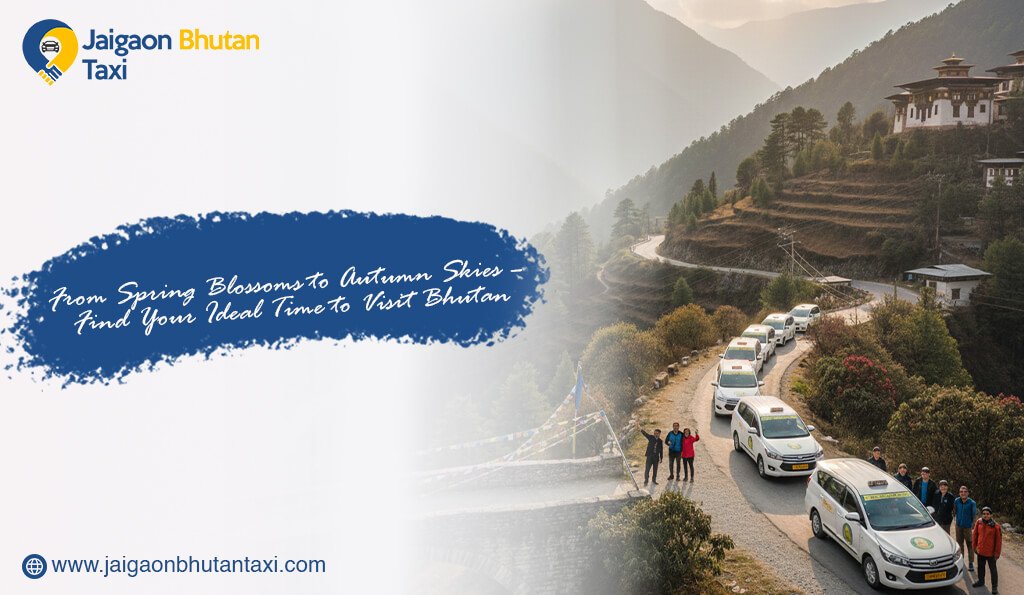
Timing your Bhutan trip wrong? Mountains hide behind clouds. Roads close. You’ll curse the planning.
Get it right? Clear Himalayan views. Perfect trekking weather. Festivals with masked dancers.
At Jaigaon Bhutan Taxi, travelers ask us constantly. When should we actually come?
Here’s what we know after years of driving these routes.
Four Seasons. Pick Yours.
- March to May. Rhododendrons exploding everywhere. Pleasant temperatures.
- June to August. Monsoon. Rain. Mud. But impossibly green landscapes.
- September to November. Clear skies. Crisp air. Those mountain views you came for.
- December to February. Cold. Snow higher up. Almost nobody around.
Best time to visit Bhutan? Depends what you want.
Spring: March to May
One of the best seasons to visit Bhutan. Ask anyone.
Temperatures between 10-25°C depending on elevation. Punakha is warmer. Paro cooler.
But rhododendrons? That’s the real draw. Entire mountainsides covered. Reds. Pinks. Whites. Against traditional architecture. Phone storage fills up embarrassingly fast.
Paro Tshechu happens late March or early April usually. Masked dances. Colorful ceremonies. Worth planning around. Trekking conditions were excellent by late April. Snow melts from higher passes.
Downside? Peak tourist season. Hotels book up. Prices climb.
Summer: June to August
Monsoon. Let’s be honest about it.
Heavy rain. Slippery roads. Landslides happen. Mountain views? Gone behind clouds for days sometimes. We don’t recommend Bhutan in the summer season for first-timers.
But. Hidden advantages exist. Tourist numbers drop dramatically. Hotels offer better rates. That “expensive country” becomes affordable suddenly. The countryside turns impossibly green. Rice terraces glowing. Waterfalls at their fullest.
If rain doesn’t bother you? Summer works. Skip serious trekking though.
Autumn: September to November
This is it. It is the ideal time to visit Bhutan.
October specifically? Best month to visit Bhutan. Around 80% of international visitors come in October. For good reason.
Monsoon ends mid-September. Skies clear. The air turns crisp. Temperatures around 20-25°C days. Mountain views at their clearest. That Tiger’s Nest photo against the blue sky? Autumn delivers.
Thimphu Tshechu happens in September. One of the biggest festivals. Trekking conditions peak. Jomolhari Trek is best October-November.
Downside? Everyone knows autumn is best. Book 4-6 weeks ahead minimum.
Winter: December to February
Valleys drop to freezing sometimes. Higher regions see real snow. Bumthang can hit -10°C.
But winter surprises people. Crystal clear skies. Best visibility of the year actually. Prayer flags against snow-covered peaks. Photographers love it. Fewest tourists. Want Bhutan to yourself? Winter delivers solitude.
Black-necked cranes arrive in Phobjikha Valley late October through mid-February. Rare birds migrating from Tibet. Places to visit Bhutan in January include Phobjikha for exactly this. Punakha Valley stays warmer—lower elevation. Pleasant even in January.
Month-by-Month Quick Guide
- January-February: Coldest months. Snow highlands. Clear valley skies. Crane season. Few tourists. Punakha Drubchen festival late February.
- March-April: Spring arriving. Rhododendrons blooming. Paro Tshechu. Excellent overall. Second-most popular period.
- May: Final month before monsoon. Wildflowers are still blooming. Fewer crowds than April.
- June-August: Heavy rain. Not ideal for most. Budget-friendly though.
- September: Transition month. Monsoon fading. Thimphu Tshechu. Good value before October rush.
- October: Best month to visit Bhutan. Perfect weather. Clear views. Book early.
- November: Excellent conditions continuing. Black-necked crane festival. Crowds are decreasing.
- December: Winter starting. Snow appears at higher elevations. Quiet. Clear.
Best Time by Activity
- Trekking: March-May and September-November. Clear trails. Stable weather. October-November offer driest conditions.
- Festivals: March-April and September-October see biggest ones. Paro Tshechu (April). Thimphu Tshechu (September).
- Photography: October-November for mountain clarity. April for rhododendron colors. Winter for snow drama.
- Budget travel: January and June-August. Lower demand. Better rates.
- Wildlife: Late October through February for black-necked cranes in Phobjikha.
Regional Weather Differences
Bhutan weather varies dramatically by elevation.
- Punakha Valley: Warmest. Pleasant even in winter. Hot summer.
- Thimphu and Paro: Moderate elevation. Cold winters. Comfortable spring-autumn.
- Phobjikha Valley: Cooler year-round. Snow winter.
- Bumthang: Central highlands. Genuinely cold winters. -10°C possible.
Frequently Asked Questions
Q1. What's the single best month?
Q2. Can I visit during the monsoon?
Q3. When do black-necked cranes arrive?
Q4. Is winter too cold?
Q5. Best time for trekking?
Q6. When are major festivals?
Q7. Cheapest time to visit?
Plan Your Visit
Bhutan travel season peaks in spring and autumn. Most reliable weather. Clearest views. Best festivals.
But every season offers something. Winter solitude. Summer greenery. Budget savings off-peak.
At Jaigaon Bhutan Taxi, we operate year-round. Know which routes work when. Which backup plans matter.
Tell us your dates. We’ll tell you honestly what to expect.
Jaigaon Bhutan Taxi Your Local Bhutan Travel Partner jaigaonbhutantaxi.com